
Introduction
Welcome to the FiveHive article for Unit 6.5 of AP Calculus!
In this article, we will be looking at interpretations of the behavior of accumulation functions involving area.
As usual, we will only cover the topics included in the CED for unit 6.5.
Behavior of Accumulation Functions
Recall that if .
This connection will be extremely important, as we analyze the first and second derivatives to understand the behavior of a function. This unit will almost be a review of unit 5, but with a small twist. Therefore, it is imperative that you have a good understanding of Unit 5. If you need help with this unit, please refer back to the FiveHive articles for unit 5.
Now, let us start!
The core principles of first and second derivatives stay the same. That is, the first derivative still describes where the function is increasing or decreasing and shows critical points. Similarly, the second derivative still describes concavity.
If is the initial function, we can determine its rate of change and critical points by looking at the graph of . The graph of is increasing or decreasing where is positive or negative respectively. Similarly, is concave up or concave down where is positive or negative respectively.
Example 1:
Let , where is a constant and the graph of is shown below.
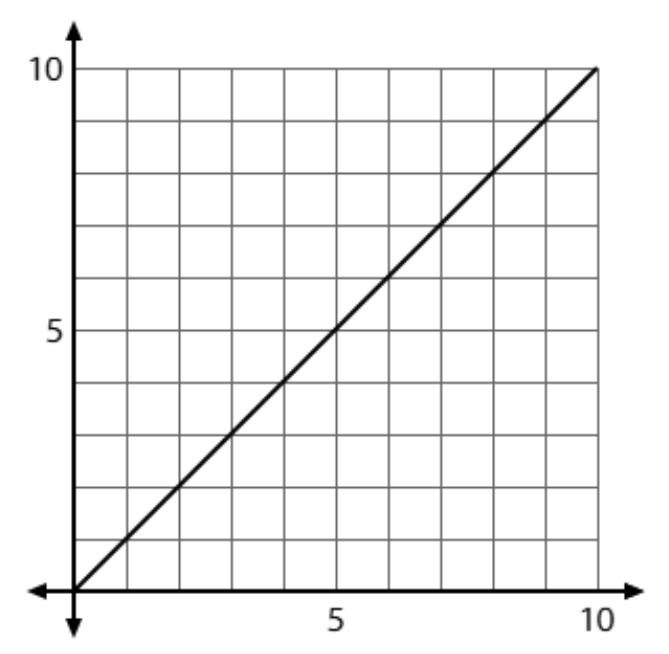
Now, we want to answer two questions: where is increasing and where is it concave up?
To find where it is increasing, we have to take the first derivative of . This results in due to the second FTC. Since is positive everywhere on , is increasing on all values of on .
To find concavity, we need to take the derivative of the first derivative of , . Harkening back to unit 5, we know that the derivative of a function is simply . Since , we know that the derivative is . Since is a positive constant, is concave up on all values of on .
Now let us make it more complicated, because why not?
Example 2:
Let us consider the same function but with an upper limit of ().
Here, the first derivative of is . Since is positive for all values of on , is once again increasing for all values of on .
Similarly, the second derivative is simply . Therefore, is once again concave up for all values of on .
Practice
Now, it is time to practice with some MCQs!