Introduction
Welcome to Unit 5 of AP Biology, and congratulations on finally reaching the halfway mark! In this unit, you will explore the fascinating question: How are traits passed from parents to offspring?
Before exploring the different ways genes and traits could be inherited, you will first learn about the process responsible for heredity, known as meiosis, and its role in genetic variation.
The Life Cycle of Humans
As you learned in Unit 4, mitosis produces body, or somatic, cells. This process contributes to the development of humans from a zygote to an embryo to a fetus to a baby, etc. However, 2 processes must occur before this: meiosis and fertilization.
There are two broad categories of cells: haploid and diploid. Diploid cells (2n) contain two complete sets of chromosomes, meaning that they have pairs of homologous chromosomes, one from each parent. For example, human body cells have 46 chromosomes (23 pairs). Haploid cells (n) contain only one set of chromosomes. Human sex cells, also known as gametes, have 23 chromosomes. When two haploid gametes fuse with each other during fertilization, they become diploid.
Meiosis
Meiosis creates haploid gamete cells in sexually reproducing diploid organisms to transmit chromosomes from one generation to the next.
Meiosis I
DNA replication occurs before meiosis begins, during the S phase of interphase, just like meiosis. Meiosis I begins with one cell that contains 46 chromosomes and ends with two cells containing 23 chromosomes each. At the end of Meiosis I, each daughter cell still has two sister chromatids. These sister chromatids will separate later in Meiosis II.
Step 1: Prophase I
- Homologous chromosomes pair up and condense, forming a tetrad
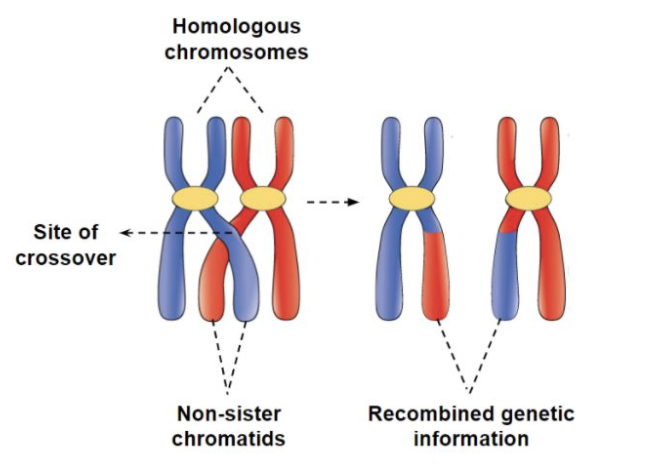
- Crossing over occurs between non-sister chromatids, also known as genetic recombination where the non-sister chromatids of homologous chromosomes exchange genetic material. This creates new combinations of alleles, contributing to genetic diversity.
- Chiasmata might form
- Meiotic spindle forms: microtubules that pull the chromosomes apart in Anaphase I
- Nuclear envelope breaks down
Step 2: Metaphase I
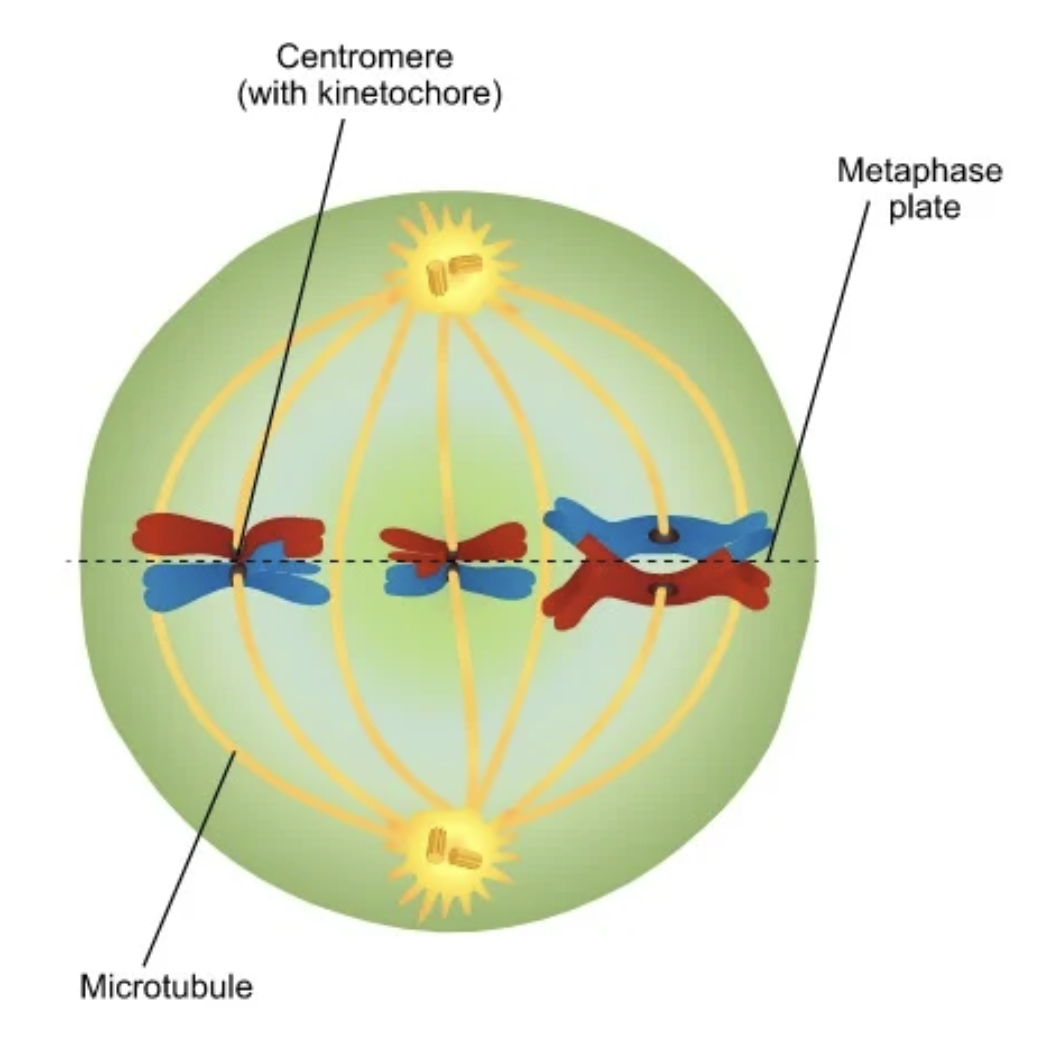
- Homologous pairs align at the middle by the meiotic spindle fibers
- Independent assortment: random orientation
- Each pair attaches to spindle fibers from the ends of the cell
Step 3: Anaphase I
- Pairs separate
- Sister chromatids remain attached
- The chromosome number is reduced to half
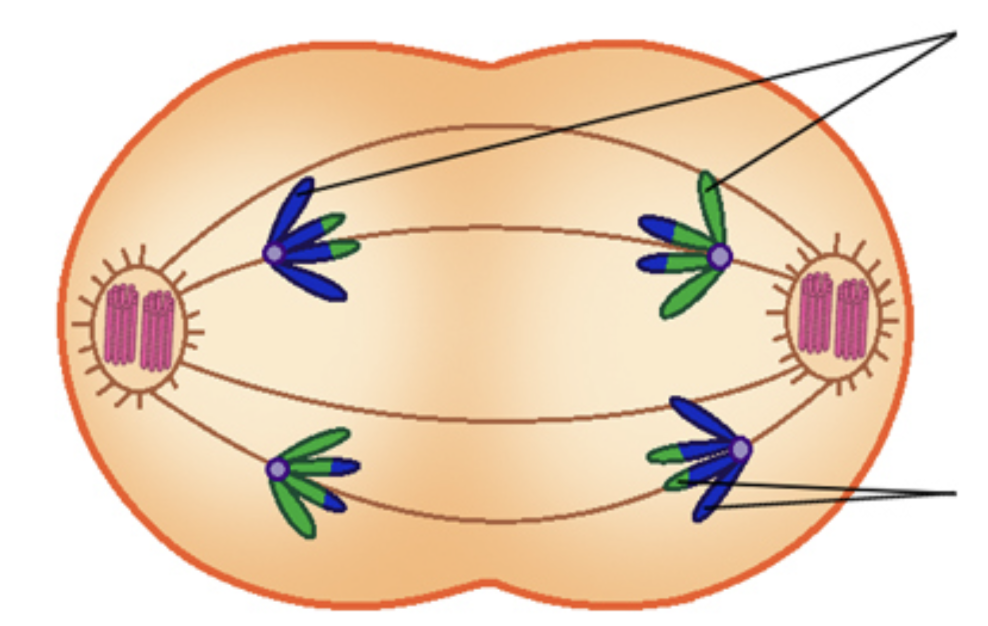
Step 4: Telophase I and Cytokinesis
- Nuclear envelopes reform around the genes
- Cell divides into two haploid daughter cells, with each cell containing one centriole
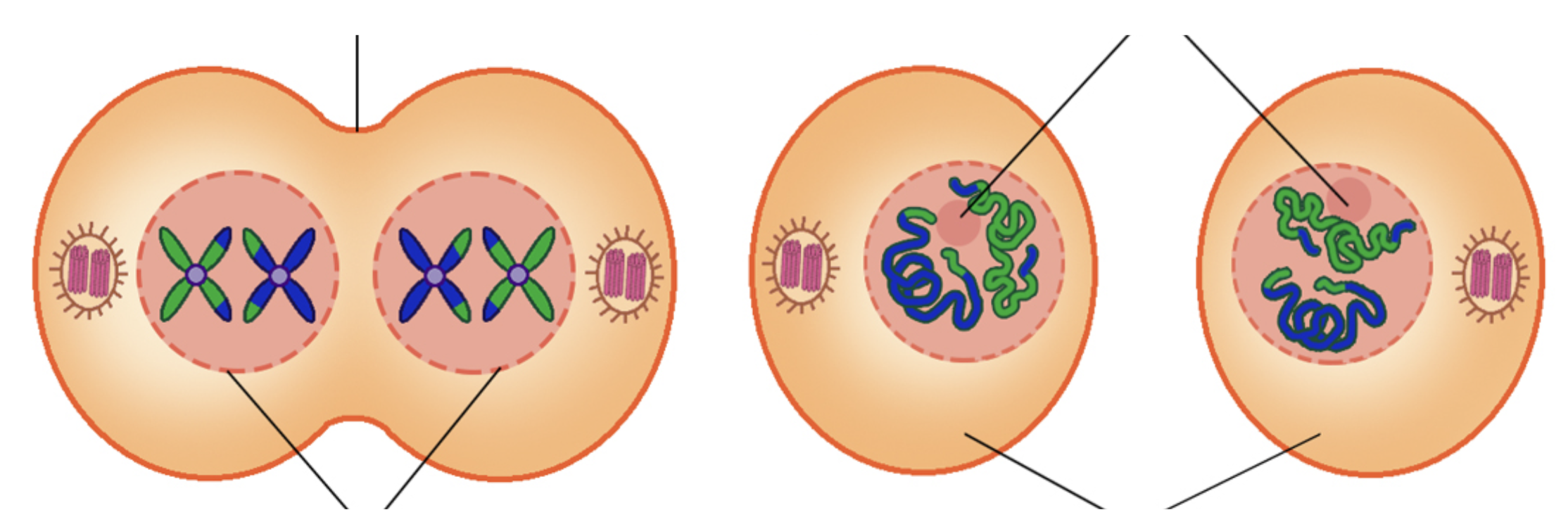
Meiosis II
Meiosis II results in 23 chromosomes with 23 single chromatids each from 23 chromosomes (46 chromatids).
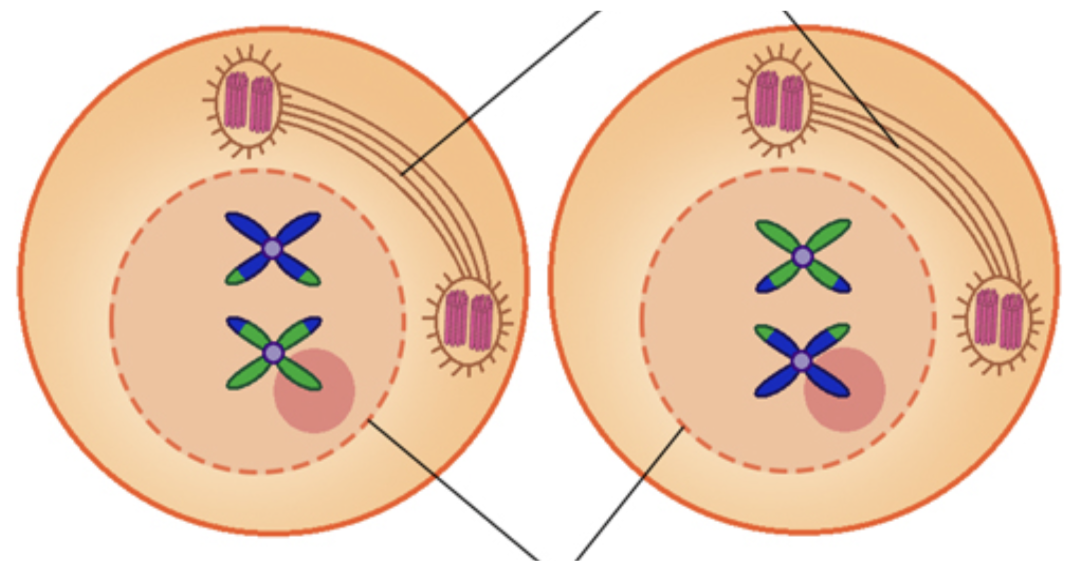
Step 1: Prophase II
- Chromosomes condense
- Nuclear envelope breaks down
- Spindle fibers reappear
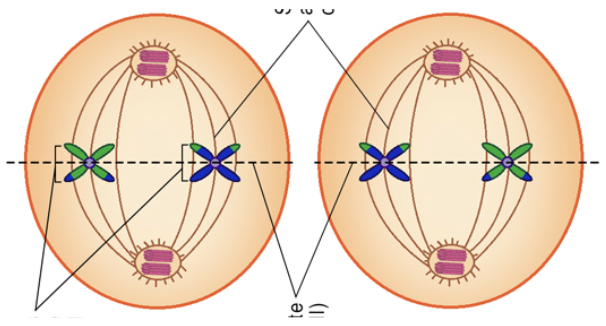
Step 2: Metaphase II
- Chromosomes align in the center
- Sister chromatids attach to spindle fibers
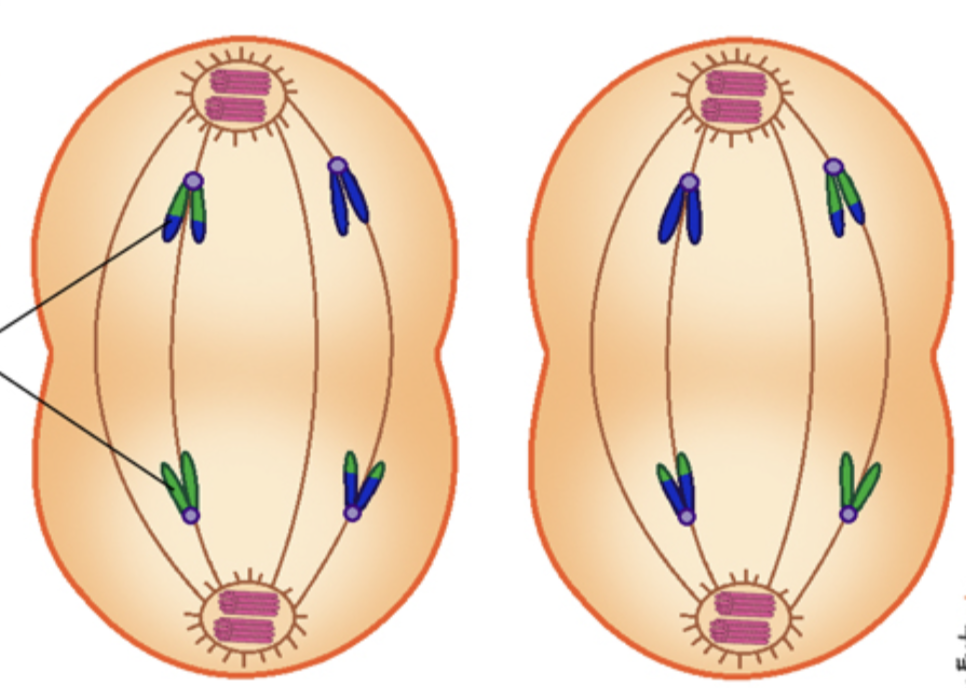
Step 3: Anaphase II
- Sister chromatids separate and move to opposite poles
- Individual chromosomes with individual chromatids
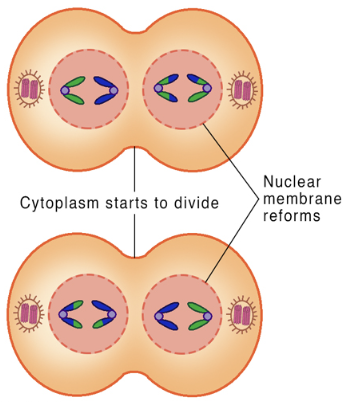
Step 4: Telophase II and Cytokinesis
- Nuclear envelopes reform
- Chromosomes decondense
- After dividing, 4 haploid (n) gametes form
Meiosis and Genetic Diversity
There are 3 main ways of creating genetic diversity that students need to be familiar with for AP Biology. This includes a) crossing over (recombination), b) independent assortment, and c) random fertilization.
Crossing Over (Recombination)
As discussed earlier, recombination occurs during prophase I of meiosis. AP Biology sometimes requires students to calculate recombinant frequency, the percentage of offspring that show new combinations of traits that are different from either parent.
There are two categories of offspring based on recombination: recombinant offspring, who have a new combination of alleles, and parental offspring, who have the same combinations as one of the parents.
Recombinant frequency is highly dependent on linked genes, genes on the same chromosome that tend to be inherited together. The closer the genes are, the higher the recombinant frequency.
Map units are a way of drawing a diagram of how close the genes are on an allele, depending on the recombinant frequency. 1% recombinant frequency = 1 map unit.
For example, if you cross 2 organisms and get 80 parental and 20 recombinant, the recombinant frequency would be 20/100 x 100% = 20%. The distance between the genes would be 20 map units.
Important rule: if the recombinant frequency reaches 50% or more, the genes assort independently, meaning that they are on different chromosomes.
Random Fertilization
Random fertilization is a process after meiosis during fertilization. This refers to the concept that any sperm from the male can fertilize any egg, combining the genetic variation from both parents.
Mutations and Genetic Diversity
There is a difference between genetic diversity and variety. Genetic diversity shuffles existing alleles into new combinations, thereby rearranging what is already there. However, this does not create variety, which is completely new alleles that did not exist before. This can only be done by either mutations in a population or introducing brand new genetic information into the population.
Nondisjunction
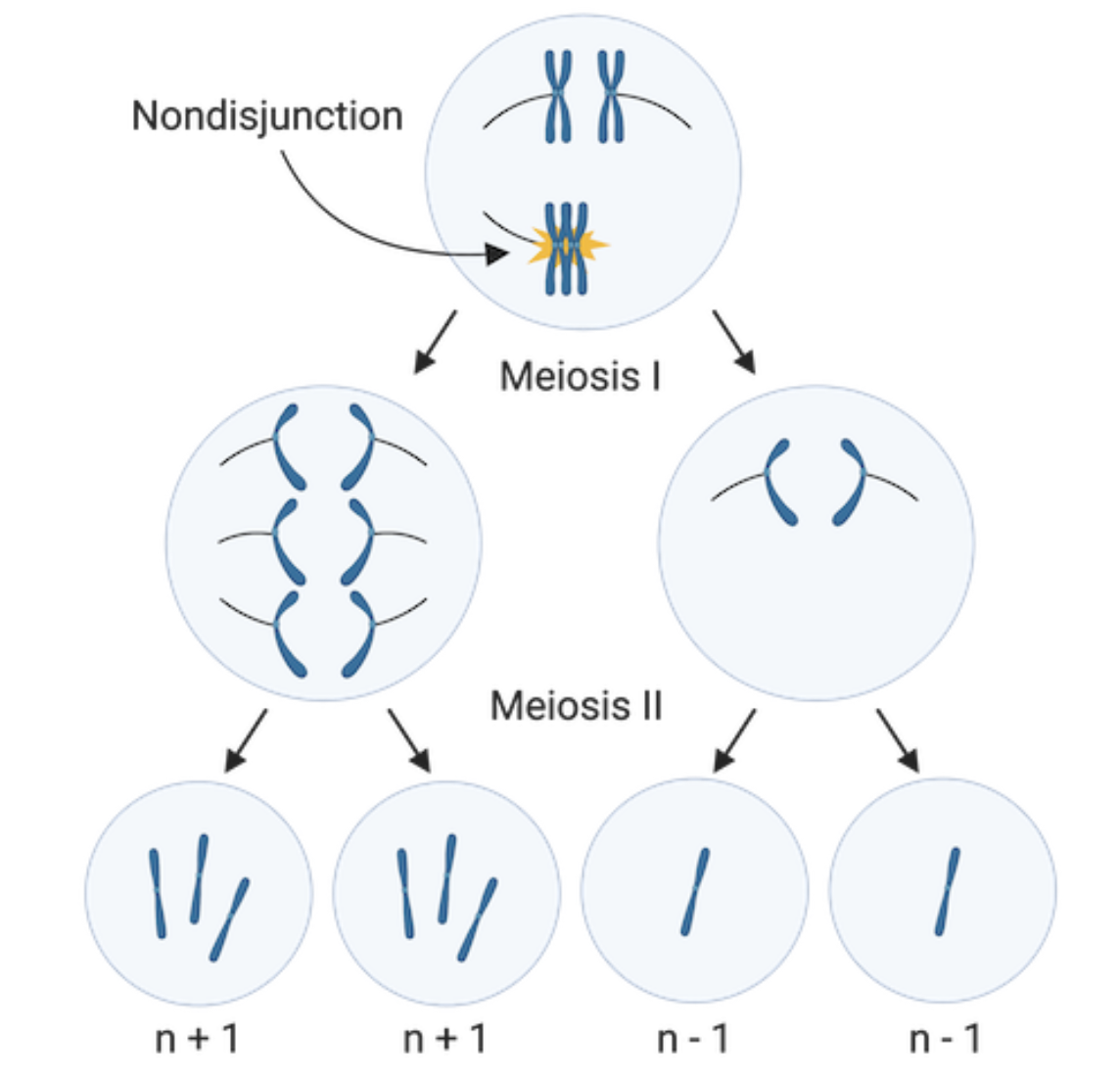
Nondisjunction is a mutation that directly results from a mistake during meiosis, which occurs when incorrect chromosome separation occurs and gametes are no longer haploid. This usually happens either during anaphase I or II. Usually, this can result in gametes having one extra or one fewer chromosome or chromatid.
Down syndrome is a commonly-known form of nondisjunction, where there’s an extra chromosome.
Summary:
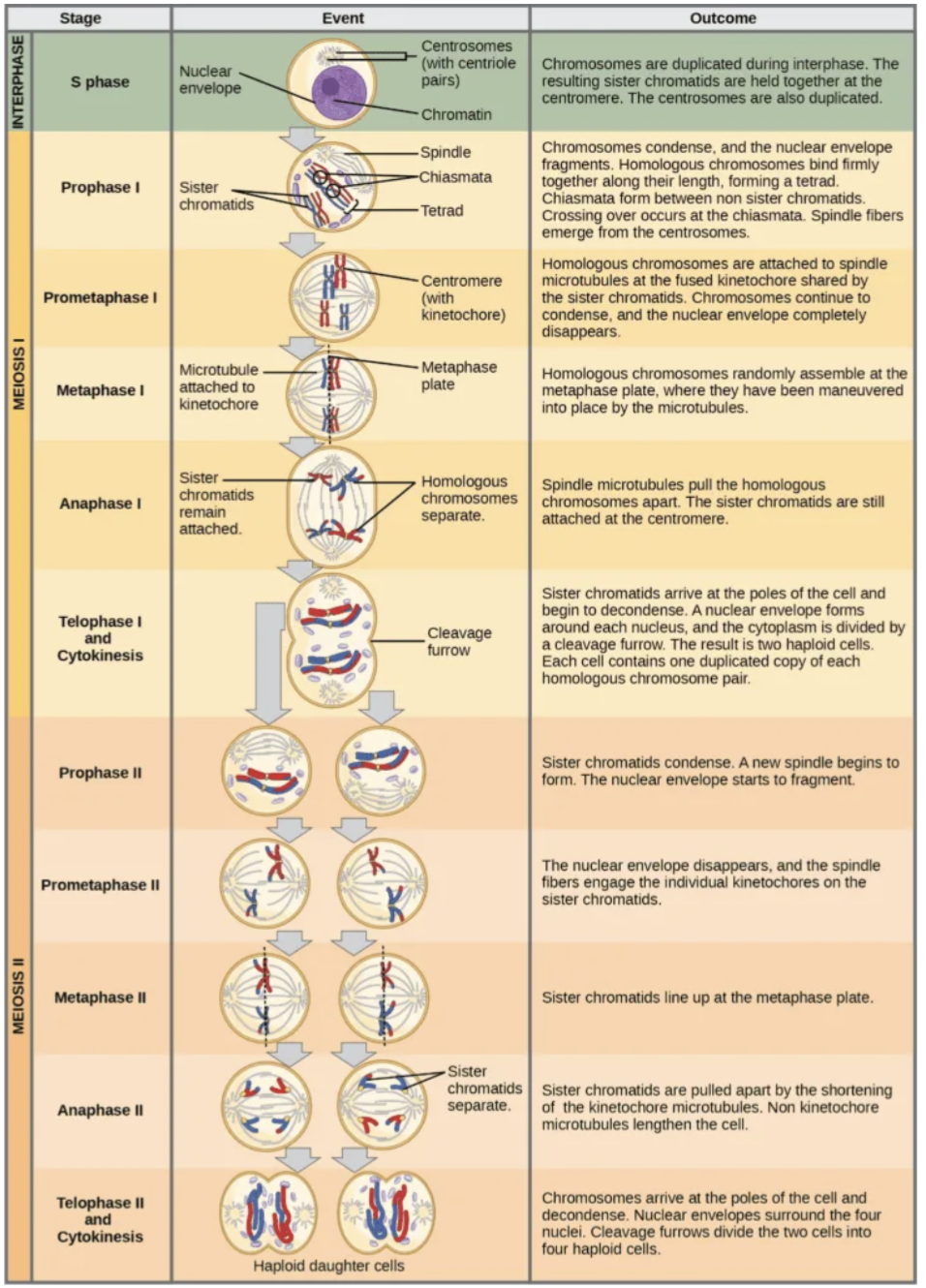
An abbreviation to remember the most important steps of meiosis, in order, is PMAT. P is for prophase (I or II), M is for metaphase (I or II), A is for anaphase (I or II), and T is for telophase (I or II). Below is an image that summarizes meiosis. The overall purpose of meiosis is to create haploid gamete cells in sexually reproducing diploid organisms to transmit chromosomes from one generation to the next. Meiosis impacts genetic variation through recombination, independent assortment, random fertilization, mutations, and chromosomal mutations such as nondisjunction.