
Welcome back! This time around, all we’ll be doing is recalling everything we learned so far and putting it all together. There will be no new information in this article, as we are just applying previous topics.
Example:
Calculate .
Let be the function described by the graph below.
(Created by graphfree.com)
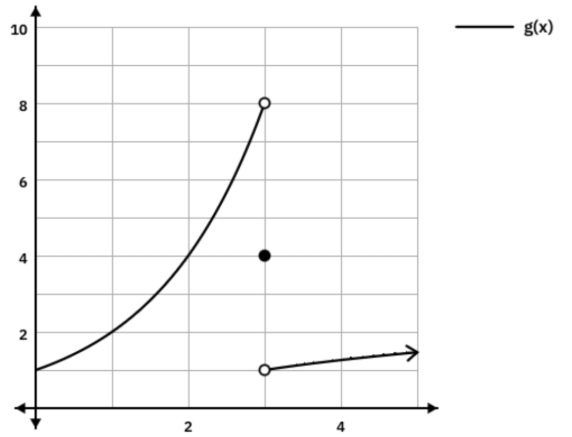
The first part of this limit comes from the term.
This simplifies to , since we can expand the to , then cancel out the .
The limit as approaches from the left of is .
Next, the limit as approaches from the left of is (pay attention to the graph’s output from the -values less than 3).
Due to the properties of limits, to find the limit of , we can just square the result of the limit of , giving us .
Since the sum of the limits is equal to the limit of the whole expression, the result is .