
Introduction
Howdy, everyone! Today we will be going over the very first topic in Unit 4 of AP Precalculus, which is a brief introduction to parametric functions.
A Note on the AP Course and Exam Description
Unlike units 1, 2, and 3 of AP Precalculus, unit 4 is not tested on the AP exam! However, if you do intend to take the AP Calculus BC exam, you will be expected to be familiar with parametric equations. Therefore, the AP Program has decided to include parametric equations as an additional topic that teachers may cover after the national AP Precalculus exam in May.
Graphing Parametric Functions
In units 1, 2, and 3, we primarily dealt with the Cartesian coordinate system, or the rectangular coordinate grid. The premise of this coordinate system is fairly simple; you plot an independent variable on the horizontal axis, and a dependent variable on the vertical axis. In unit 3, you were introduced to the polar coordinate system, which plots the distance of a point from the pole with respect to an angle of the point from the polar axis. The following are examples of functions plotted on each respective coordinate system as a memory refresher.
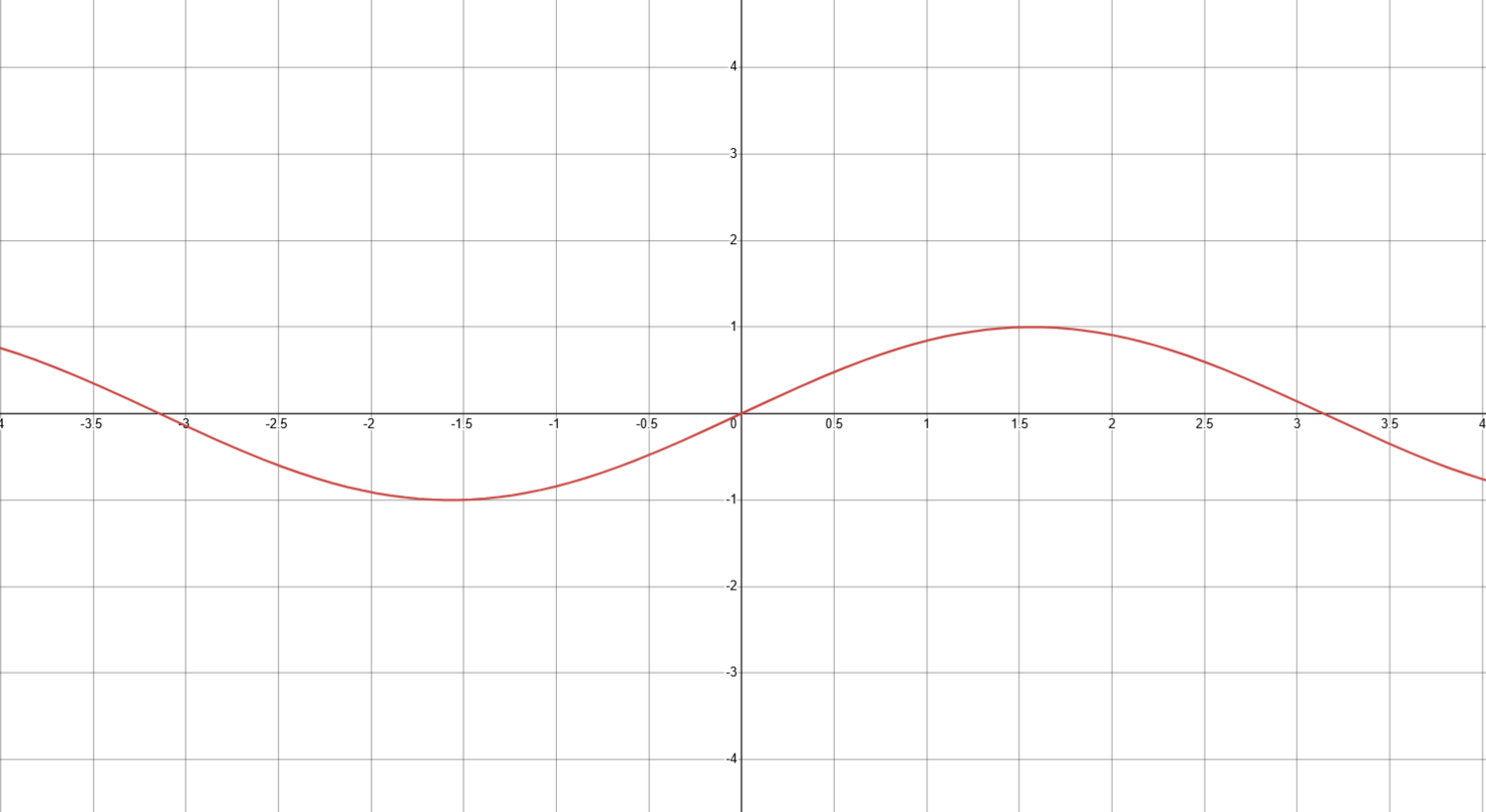
Figure 1: A graph of . Made using Desmos,
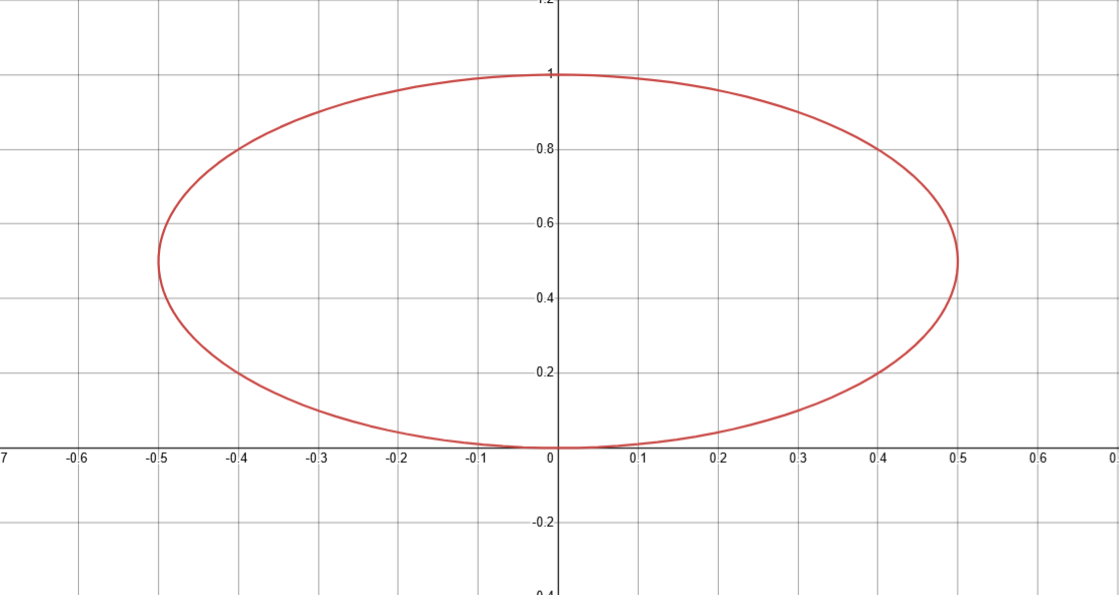
Figure 2: A graph of . Made using Desmos.
One of the things that we like to do with the rectangular coordinate system is to plot the straight line motion of an object as a function of time. However, this is rather limiting because most objects don’t tend to move in one direction only, except for lab carts along tracks; they move in two or three dimensions.
This is where parametric equations come in handy. Instead of having the horizontal axis be defined by a function’s independent variable and the vertical axis be defined by the dependent variable, we can make both axes dependent on a single independent variable , which is usually used to refer to time. This variable is usually referred to as the parameter.
So, how would a parametric equation be plotted onto a graph? Let’s take a look at an example.
Example: Plot the parametric equations and .
The first thing that we want to do when plotting a new or unfamiliar type of function is to create a table with the values. For parametric functions, we’ll actually construct a three-way table because we need values for , , and .
Now that we have multiple rows of values, we can go ahead and plot a few points on a graph. For the types of parametric functions covered in AP Precalculus, we’re still using the rectangular coordinate plane, so we’ll only plot our and values. And thus, we now have a shape called a lemniscate… in parametric form.
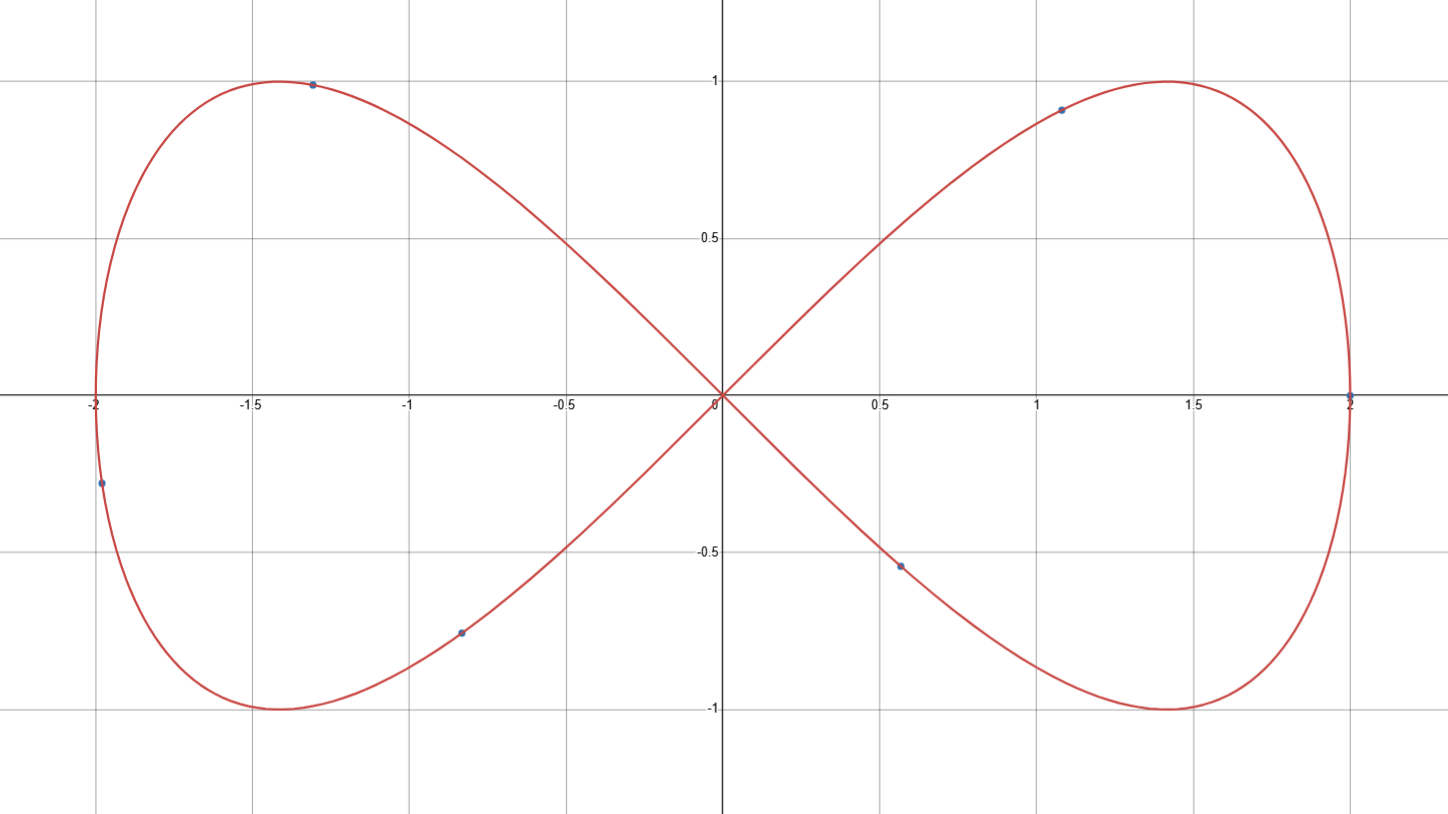
Figure 3: A graph of the parametric equations and . Made using Desmos.
Now, we may think we’re done, but we’re actually not! We actually have one more step: indicating the direction of the graph. Because our graph is dependent on time, the path traced by our parametric curve is heavily reliant on the time that, say, a particle traveling on this path takes to reach a certain point on the coordinate plane. We’ll touch on this more in topic 4.2. As a result, the following is the actual graph of our lemniscate.
.png?alt=media&token=bb893862-faf6-47fb-bd38-f7d6373237a7)
Figure 4: A graph of the parametric equations and with time labels added to show direction. Made using Desmos.
In “rectangular land”, we are often limited by the Vertical Line Test. A single equation like (a circle) isn’t considered a function because one -value maps to two -values. However, with parametrics, we bypass this restriction entirely! Because and are both functions of , we can trace circles, loops, and even figure-eights like this while maintaining the “cleanliness” of functions.
Domain Restrictions
In the rectangular functions you’ve studied so far, we usually assume the domain is “all real numbers” unless a square root or a denominator tells us otherwise. However, in parametric functions, the parameter often comes with a strict set of boundaries called a restricted domain. This is usually written as an interval, such as . These restrictions are vital because they define exactly where the motion starts and stops.
If is restricted, your graph will have a clear Initial Point (the coordinate when ) and a Terminal Point (the coordinate when ). Without these boundaries, a particle modeling a 100-meter dash would run forever! When graphing, always check the domain first; if is restricted, your “curve” might actually be a short segment or a specific arc rather than an infinite line or a complete shape.
Eliminating the Parameter
Sometimes, you will be asked to remove the parameter of a parametric equation. This involves removing the parameter, , in order to rewrite the pair of parametric equations as an equation of in terms of , or vice versa. The most common use for this procedure is to rewrite a pair of parametric equations in rectangular form.
The easiest way to do this involves the following three-step procedure.
- Solve the simpler equation for . While you can solve either parametric equation for , choosing the simpler one will make this procedure a lot easier.
- Substitute your result from step (1) into in the other parametric equation.
- Isolate for the given variable, and simplify if the problem asks you to do so.
Example: The path taken by a particle in the plane can be modeled by the parametric equations and . Rewrite this pair of parametric equations as an explicit function in rectangular form.
Solution: We have two options as to how we’re going to begin: we could either solve for or for . In this example, I’ll opt to solve for , since it’ll make removing the parameter an easier process.
Now that we have solved for the parameter , all we need to do now is substitute it into .
It would be beneficial to simplify this, and if this were an article on units 1 through 3, I’d urge you to simplify. However, for unit 4, I advise that you follow your teacher’s instructions, since this unit isn’t tested on the AP exam. And here’s a dirty secret that I’ll let you in on early before taking AP Calculus BC: in AP Calculus, you don’t need to simplify your answers for free-response questions.